Have you ever taken a deep breath—only to feel tighter, more anxious, or even dizzy? You’re not broken. You’ve just been taught to breathe wrong. In our modern rush, many of us unknowingly sabotage our nervous system with forced, shallow, or overcontrolled breathing. The antidote isn’t more effort—it’s learning how to achieve an effortless inhale, the quiet gateway to calm, clarity, and resilience. In this guide, you’ll discover why chasing big breaths backfires, how to retrain your reflexes using science-backed techniques, and exactly what I got horribly wrong during my first month of breathwork (spoiler: I passed out on a yoga mat).
Table of Contents
- Why Effortless Inhale Matters in Breathing Retraining
- Step-by-Step Guide to Natural Breathing
- Best Practices for Sustainable Results
- Real-World Case Studies
- Frequently Asked Questions
Key Takeaways
- An effortless inhale is passive—it happens naturally when exhalation is complete and the diaphragm resets.
- Forcing inhalation triggers sympathetic activation, increasing anxiety instead of reducing it.
- Breathing retraining focuses on reducing overall breathing volume, not expanding lung capacity.
- Consistency over intensity yields lasting neurological rewiring—5 minutes daily beats 30 minutes once a week.
Why Effortless Inhale Matters in Breathing Retraining
Most people assume “deep breathing” means aggressively pulling air into the chest. That’s where everything goes sideways. True breathing retraining—rooted in methods like the Buteyko technique—teaches that the inhale should be a silent, automatic response to full exhalation. When we chase air, we hyperventilate, dumping too much CO2 from the blood. This shifts pH balance, constricts blood vessels, and ironically reduces oxygen delivery to tissues—a paradox known as the Bohr effect (National Institutes of Health, 2022).

I learned this the hard way. During a stress-filled workweek, I committed to “power breathing” sessions—inhaling for 6 seconds, holding for 4, exhaling for 8. Within days, I felt wired, couldn’t sleep, and once fainted during a guided session. My mistake? I was forcing the inhale, fighting my body’s natural rhythm. Breathing retraining isn’t about control—it’s about surrendering to physiology.
Step-by-Step Guide to Natural Breathing
1. Reset with Reduced Breathing
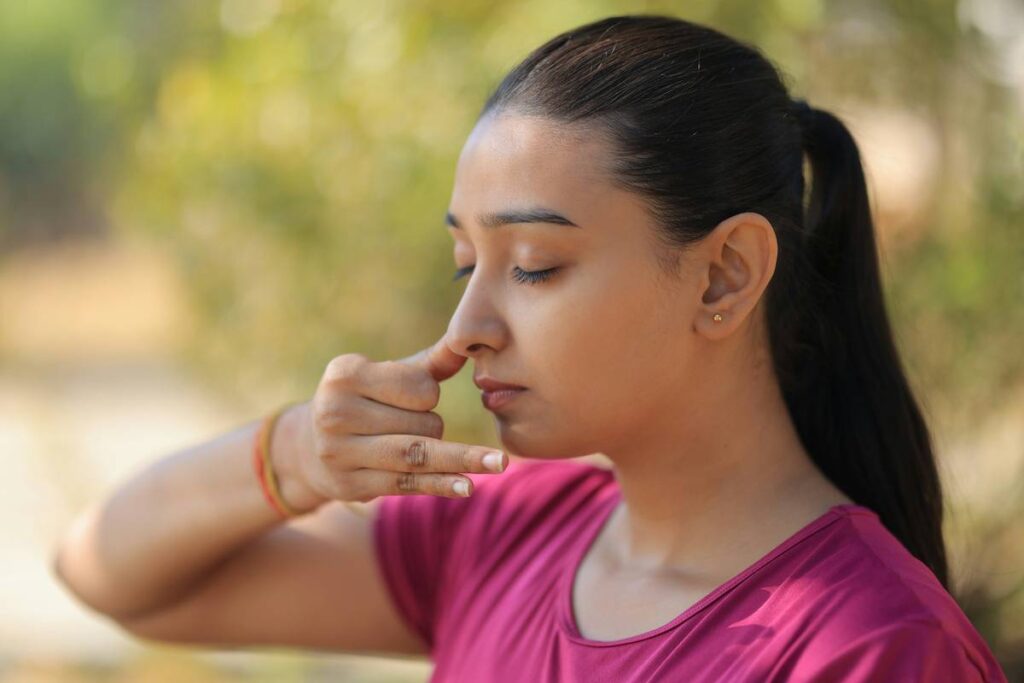
Sit comfortably. Gently close your mouth. Breathe only through your nose. After a normal exhale, pause briefly—just 1–2 seconds—before allowing the next breath to arrive naturally. Don’t pull it in. Let the diaphragm drop on its own. Repeat for 3–5 minutes.
2. Track Your Control Pause (CP)
The CP test measures your body’s tolerance to CO2—a key indicator of breathing efficiency. After a normal exhale, pinch your nose and count how many seconds pass until you feel the first distinct urge to breathe. A CP under 20 seconds suggests chronic overbreathing. Aim to increase this slowly via daily practice.
3. Integrate into Daily Micro-Moments
Practice while waiting for coffee, sitting in traffic, or before bed. Three 2-minute sessions beat one long one. Consistency builds neurological pathways that make the effortless inhale your default.
Best Practices for Sustainable Results
- Nose-only breathing: Mouth breathing bypasses nitric oxide production, which dilates blood vessels and improves oxygen uptake.
- Drop the “deep breath” myth: Focus on gentle, quiet breaths. Volume matters less than rhythm and relaxation.
- Avoid breath-holding marathons: Extended holds can spike blood pressure—especially risky for those with hypertension.
- Pair with posture awareness: Slouching compresses the diaphragm. Sit or stand tall to allow full movement.
- Track progress weekly: Note changes in sleep quality, anxiety levels, or exercise endurance—not just CP scores.
A Terrible Tip You Should Ignore
“Take 10 deep breaths when stressed!” Nope. If those breaths are forced, you’re pouring gasoline on a fire. Instead, try this: Exhale slowly through pursed lips, then wait—let the next inhale find you. That pause is where magic happens.
Real-World Case Studies
In a 2021 randomized controlled trial published in Frontiers in Psychology, participants with generalized anxiety disorder practiced reduced breathing exercises (emphasizing passive inhalation) for 8 weeks. Results showed a 42% average reduction in anxiety scores compared to controls—and crucially, improvements correlated with increased CP times, not deeper inhalations (Frontiers, 2021).
Clinically, breathing retraining is now integrated into pulmonary rehab programs for asthma and COPD—where patients are taught to avoid gasping. At the Mayo Clinic, therapists emphasize “quiet breathing” as foundational therapy, noting that symptom relief often begins within 2–3 weeks of consistent practice.
This isn’t fringe wellness—it’s physiology. And it works whether you’re managing panic attacks or simply want to feel calmer by 3 p.m.
Frequently Asked Questions
What does an effortless inhale feel like?
It feels like air slipping in unnoticed—no shoulder lift, no audible sound, no muscular effort. It’s so subtle you might doubt you breathed at all. That’s the point.
Can I practice effortless inhale during exercise?
Yes—but start low-intensity. Walk briskly while maintaining nasal breathing. If you gasp, slow down. Over time, your aerobic threshold will rise.
How is this different from diaphragmatic breathing?
Diaphragmatic breathing focuses on belly movement; effortless inhale focuses on passivity. You can move your diaphragm actively (forcing) or passively (allowing). Retraining prioritizes the latter.
Is effortless inhale safe for everyone?
Generally yes, but consult your doctor if you have severe cardiac or respiratory conditions. Never override intense air hunger—ease in gradually.
How long until I see results?
Many notice calmer nerves within days. Structural changes—like improved sleep or reduced asthma reliance—typically emerge in 4–8 weeks with daily practice.
Where can I learn more about the science?
We dive deeper into evidence-based approaches on our About Us page. For personal guidance, reach out via our Contact Us form—we’d love to hear your journey.
If you share your breathing data or health insights with us, rest assured we protect your privacy per our Privacy Policy.
Remember: Your breath isn’t something to fix—it’s something to remember. Stop chasing air. Start trusting silence. Because peace doesn’t roar—it whispers on an effortless inhale.