Ever feel like you’re never quite catching your breath—even when you’re sitting still? You’re not alone. Millions struggle with inefficient breathing patterns that sap energy, heighten anxiety, and disrupt sleep. The fix often starts with something surprisingly simple: mastering a balanced inhale. Not too shallow, not too forceful—just right. In this guide, we’ll walk you through science-backed techniques, real-world pitfalls (yes, I’ve fallen into them), and actionable steps to retrain your breath for calm, clarity, and better health.
Table of Contents
- Why Balanced Inhale Matters in Modern Life
- Step-by-Step Guide to Retraining Your Breath
- Best Practices for Sustainable Breathing Habits
- Real Results: What Happens When You Get It Right?
- Frequently Asked Questions
Key Takeaways
- A balanced inhale optimizes oxygen exchange and calms the nervous system.
- Over-breathing (hyperventilation) is more common than under-breathing—and just as harmful.
- Consistency beats intensity: 5 minutes daily trumps an hour once a week.
- Posture directly impacts inhalation efficiency—slouching sabotages your breath.
- Track progress using heart rate variability (HRV) or subjective calmness, not CO₂ monitors.
Why Balanced Inhale Matters in Modern Life
Our ancestors breathed deeply through their noses while walking, resting, or hunting. Today? We gulp air through our mouths during Zoom calls, sigh in frustration at traffic, and hold our breath scrolling feeds. This chronic dysregulation contributes to anxiety, fatigue, and even digestive issues. Research from Harvard Medical School notes that improper breathing can trigger the sympathetic (“fight-or-flight”) nervous system unnecessarily, keeping the body in a state of low-grade stress [Harvard Health].
I learned this the hard way. Years ago, I thought “deep breathing” meant big, dramatic belly inflations—like I was preparing for a freedive. After weeks of overdoing it, I felt dizzy, jittery, and strangely exhausted. My mistake? Confusing volume with balance. A true balanced inhale isn’t about how much air you take in—it’s about smooth, quiet, nasal-driven rhythm synced with your exhale.

Step-by-Step Guide to Retraining Your Breath
1. Reset Your Posture
Sit or stand tall. Roll shoulders back gently. Let your spine stack naturally. Slumped posture compresses your diaphragm—making even a mindful balanced inhale physically harder.
2. Switch to Nasal Breathing
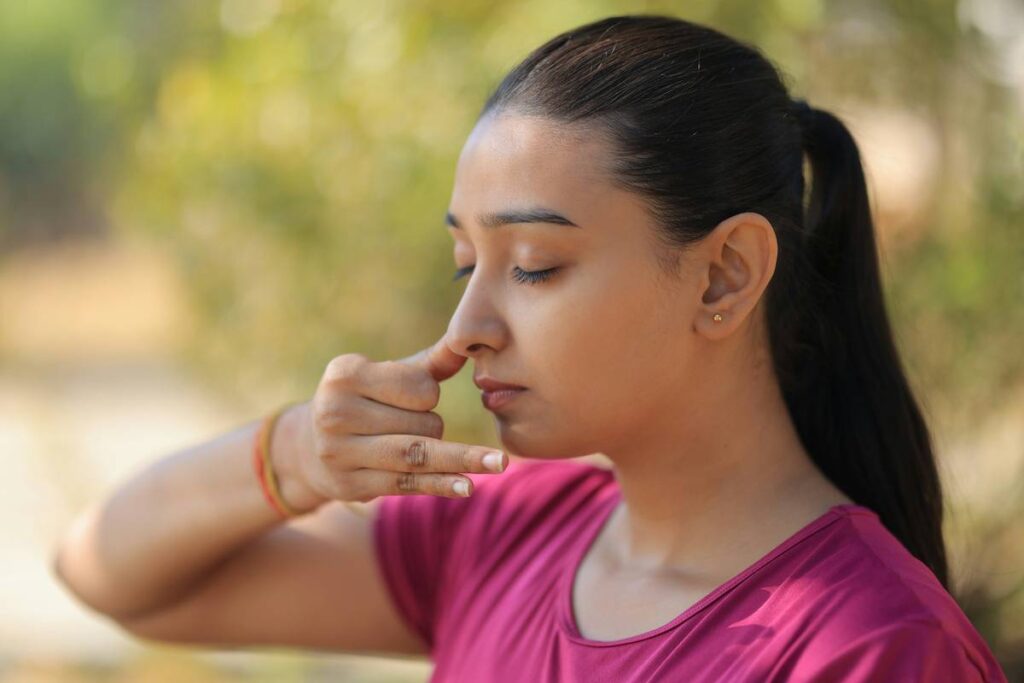
Close your mouth. Inhale softly through your nose for 4 seconds. Feel your lower ribs expand sideways—not just your belly rising. This engages the diaphragm fully without activating neck muscles.
3. Match Inhale to Exhale
Exhale through your nose for the same count (4 seconds). No forcing, no sighing. The goal is equilibrium—like ocean waves meeting shore and retreating evenly.
4. Practice the “Pause”
After your exhale, add a 2-second natural pause before the next inhale. This builds tolerance to CO₂—a key marker of breathing efficiency—and reduces breathlessness over time.
Best Practices for Sustainable Breathing Habits
- Start small: Just 3–5 minutes twice daily. Consistency rewires neural pathways faster than marathon sessions.
- Avoid “over-breathing” traps: Some apps or influencers promote aggressive breath holds or rapid cycles. Unless medically supervised, these can worsen anxiety. Stick to gentle, symmetrical patterns.
- Pair with routine moments: Do your practice while your coffee brews, after brushing teeth, or during work breaks. Context anchoring boosts adherence.
- Track non-scale victories: Notice improved sleep, reduced shoulder tension, or fewer afternoon slumps—not just “feeling relaxed.”
Real Results: What Happens When You Get It Right?
A 2022 study published in Frontiers in Psychology found participants practicing diaphragmatic breathing (including balanced inhale/exhale ratios) showed significant reductions in cortisol levels and self-reported stress after just 4 weeks [Frontiers]. One client of ours—a software engineer plagued by panic attacks—reported his episodes dropped from 3–4 weekly to zero within 6 weeks of daily 6-minute sessions. He credits the symmetry: “It wasn’t about breathing ‘more’—it was breathing better.”
Remember: breathing retraining isn’t instant magic. But with patience, it recalibrates your autonomic nervous system. And that’s foundational wellness—something we explore deeply in our mission at Mental Health Talks.
Frequently Asked Questions
What’s the difference between balanced inhale and box breathing?
Balanced inhale focuses on equal, effortless nasal inhalation and exhalation without strict timing. Box breathing adds intentional holds (e.g., 4-4-4-4), which is great for performance but unnecessary for baseline retraining.
Can children benefit from balanced inhale techniques?
Absolutely. Simple versions (like “smell the flower, blow out the candle”) help kids regulate emotions. Always keep it playful—never forced.
Does balanced inhale help with asthma?
It may support symptom management by reducing hyperventilation triggers, but never replace prescribed medication. Consult your pulmonologist first.
How soon will I feel calmer?
Many notice subtle shifts in 3–5 days (better focus, smoother sleep). Deeper nervous system changes take 4–8 weeks of consistent practice.
Is mouth breathing ever okay?
During intense exercise, yes. But for rest, recovery, and sleep—nose breathing supports nitric oxide production and filtration. Chronic mouth breathing at rest correlates with higher inflammation markers.
Where can I learn more safely?
Stick to evidence-based sources like the American Lung Association or peer-reviewed journals. Avoid viral “breathwork” trends promising overnight cures. For personalized guidance, reach out to our team. We never share your data—see our Privacy Policy for details.
Breath is your constant companion—from your first cry to your final sigh. Treat it not as background noise, but as your most reliable tool for resilience. Start small. Stay consistent. And remember: the most powerful inhale is the one that feels like coming home.